
Conventional laundry detergent harms the environment and your health. But so many eco friendly options seem less effective. Not to mention pricier and harder to come by.
But here is the good news:
We did the homework and found the best 5 eco friendly laundry detergent options worth your pennies. They are all free of dangerous ingredients and available to buy online. I don’t know about you, but online shopping for household stuff is my new norm now.
And suppose you are interested to know what makes laundry detergent work. We also explain the science behind it and give you a full list of the ingredients you should avoid and why.
How Does Laundry Detergent Work?
Cleaning clothes, in essence, requires three elements – detergent, water, and heat. For these three to work together, you also need some means of agitating the clothes. That’s where the washing machine comes in.
The job of laundry detergent is to remove dirt and stains from your clothes. How exactly does this happen? A good detergent has three parts:
- Surfactants grab onto grime and stain molecules, pulling them into the surrounding water. When the water drains from the washing machine, the surfactant-plus-dirt molecules wash away.
- Water conditioners (or builders) help the surfactants do their job by neutralizing the minerals in tap water. Naturally-occurring calcium, magnesium, and other particles also attract the surfactant. The water conditioner allows surfactants to focus only on the dirt. If you’re living in an area with hard water (more minerals), the builder is essential for effective cleaning.
- Stain-targeting chemicals include bleach and enzymes. Bleach works well to get rid of organic stains. But it’s usually only effective at higher temperatures (over 60C/140F). The primary benefit of enzymes over bleach is their power to remove stains without hot water. Using cold water means using less energy to do laundry.
Cooler water is also gentler on fabrics, reduces microplastic shed from synthetics, and helps your clothes last longer.
How to Choose the Best Natural Laundry Detergent
There are three main things you want in an eco friendly detergent. It should:
- Only contain safe ingredients – no SLS/SLES, phthalates, formaldehyde, fragrance, etc. Some detergent residue is always on your clothes and gets absorbed by your skin as you wear them. Skin absorption is one reason why laundry detergent should be free of irritants and harmful compounds.
- Clean your clothes without build-up, even if the water is hard.
- Work with cold water and gentle cycles to protect fibers from breaking down and saves energy. The detergent has to be strong enough to break down stains and dissolve them into the water.
Here is how you can pick an eco friendly detergent that is good for your skin AND the environment:
Beware of Greenwashing
Greenwashing is the practice of marketing a product as sustainable without actually taking steps to make it so. It’s companies selling you the eco friendly dream.
To not fall victim to greenwashing, pay attention to labels. Does it have dangerous chemicals? It can be hard to read through a list of ingredients, but knowing what to avoid will pay off.
Check the company website, too. Vague claims and big promises usually equal greenwashing. Choose companies who are transparent about their approach, down to the numbers.
Look for Bio-based Products
Bio-based products are made from plants or any other renewable, nature-derived material.
Unlike products made from petroleum, bio-based ingredients are sustainably sourced and usually also biodegradable. The USDA Certified Biobased Product label can help you find these items and support them.
And the impact can be impressive. Biobased products displace 300 million gallons of petroleum every year. This amount is equal to taking 200,000 cars off the road. At the same time, it also reduces landfill waste and encourages sustainable economies.
The ‘Safer Choice’ Label
Better, non-toxic products use the ‘Safer Choice’ label created by the US Environmental Protection Agency (EPA).
Laundry detergent can’t be 100% chemical-free, not if you want it to be effective. The EPA helps you choose non-toxic formulations even if they do contain synthetic ingredients.
The ‘Safer Choice’ certification evaluates every product ingredient against stringent safety criteria. The EPA considers both environmental and health impacts, as well as product performance. This way, you know the product is not only gentler, but it also works as well as a more potent chemical would.
EWG’s Ratings
The Environmental Working Group (EWG) examines product safety and environmental impacts. They recognize that US law is not always up to date when it comes to the ingredients in cleaning supplies and lobby against harmful chemicals.
The EWG publishes one of the most comprehensive, science-backed consumer product guides based on their ingredient safety.
The EWG’s rating is also based on disclosure – how much a company discloses about their products. They have taken the time to find information on products, even when it’s not always readily available.
Top 5 Eco Friendly Laundry Detergents
These products all score high on EWG’s Guide to Healthy Cleaning, which has some of the strictest health and environmental standards.
1. Attitude Natural Laundry Detergent
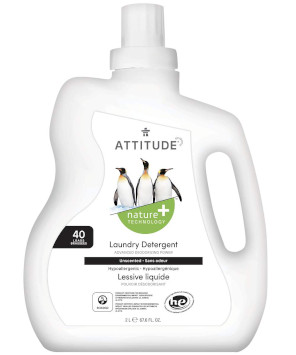
This Attitude detergent is perfect for sensitive and allergy-prone skin. It is gentle and hypoallergenic while also being formulated for cold water.
The detergent is ECOLOGO-certified biodegradable, 100% vegan, and cruelty-free. It comes in a bottle made out of recycled plastic as well as an eco-friendly refill option. It’s a Grade A on the EWG guide, free of SLES, phosphates, dyes, and irritating enzymes.
2. Better Life Natural Concentrated Laundry Detergent
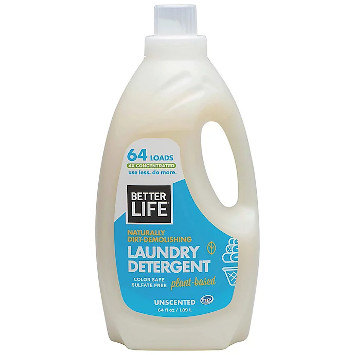
We are huge fans of the entire Better Life product line, and their laundry detergent is no exception. The product is free from dyes, synthetic fragrances, sulfates, and petroleum solvents. It’s one of the safest and most eco-friendly options on the market.
Users have said this is one of the most efficient detergents they’ve used, even in cold water. It protects the fabric colors and gives your laundry a pleasant, natural smell. The scent doesn’t last long, though, which is a positive since long-lasting fragrances are almost always synthetic.
3. Dropps Laundry Detergent Pods
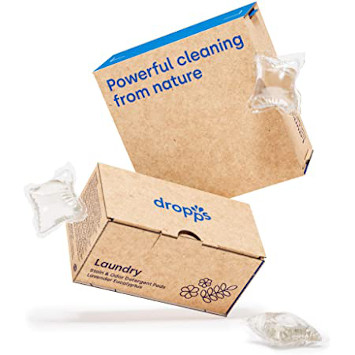
These laundry pods are made from plant-based ingredients and come in three options: stain and odor, sensitive skin, and activewear. All the pods are dye-free, phosphate-free, phthalate-free, paraben-free, optical brightener-free, and never tested on animals. The benefit of the pod is how easy it is to use. And, there are no extra plastic measuring cups or jugs required.
Dropps pods are wrapped in dissolvable packaging and come in a minimalist compostable box.
4. Ecover ZERO Laundry Liquid Concentrate
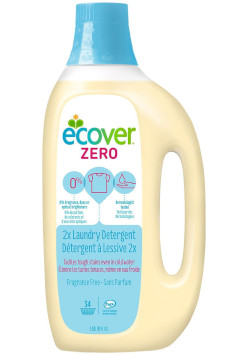
The Ecover ZERO detergent contains zero dyes, phosphates, and optical brighteners. It is dermatologist tested and approved, perfect for those with skin conditions. Ecover is also cruelty-free, never tested on animals, and comes in a recycled plastic bottle.
5. Molly’s Suds Unscented Laundry Detergent Powder
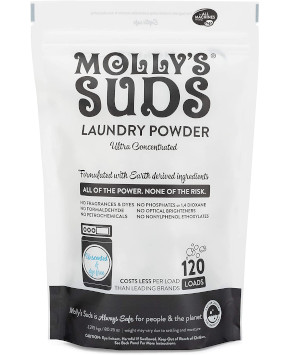
This is a highly effective yet gentle laundry powder. You can use this concentrated formula to pre-treat tough stains or put it directly in your washer.
It only contains four earth-derived ingredients. Plus, the concentrated formula will clean your clothes very well, even if you use a shorter cycle and cold water. It’s also safe for HE washers.
Toxic Ingredients to Avoid in Laundry Detergent
While certifications and guides can help you find trustworthy brands, learning to read the labels is an invaluable skill. New products appear every day, and it’s not realistic that guides will always keep up with all the launches.
Instead, when you see a potential new item, research it yourself. Here are the toxic chemicals to look out for:
Fragrances
The smell of fresh laundry often comes at a steep price.
When you see the word “fragrance” on an ingredient list, be very cautious. Here is why that is:
Let’s say you want your detergent to smell like roses. You can distill the flowers to get rose oil. Or you could manufacture a similar molecule from petroleum.
If the product contains essential oil, it will be labeled, for instance, Rosa Damascena Flower Oil. However, these oils are incredibly pricey since it takes 10,000 roses to make a thumb-sized amount of the stuff.
The artificial scents are much cheaper, but they are made out of petroleum and coal tar. These non-renewable raw materials should be enough to turn you away from fragrances. Still, they are just the tip of the iceberg.
Since fragrances are considered a trade secret, manufacturers don’t have to tell you precisely what is in them. They could contain thousands of harmful chemicals, all hiding behind a single word. These ‘smelly’ molecules have been linked to a wide range of health issues – from skin and lung irritation to cancer.
Don’t be fooled by ‘fragrance-free’ or ‘natural fragrance’ labels, either. There is no standard for what ‘natural fragrance’ means. Plus, even if a product doesn’t smell like anything, it doesn’t mean the manufacturer didn’t add a fragrance to cover up the chemical smell.
Phthalates
Phthalates are a common ingredient in laundry detergent. Since they mimic normal human hormones, they are linked to endocrine issues. There are many types of phthalates used in plastics, cosmetics, and cleaning supplies. Worst of all, you usually won’t find them on labels.
How can you avoid them? Avoid fragrance. Phthalates are one of those chemicals that hide behind the word ‘fragrance’ on ingredient lists. They can also hide in plastic bottles, so avoid recycling codes 3 and 7 on product packaging.
Dyes
There is no reason for your laundry detergent to contain dyes. They don’t clean your clothes and, while they might help them fade slower, the health risks are not worth it.
Dyes are a common cause of allergic reactions like contact dermatitis and a range of other rashes. Also, many of them are proven carcinogens and hormone disruptors.
Chlorine Bleach
Sodium hypochlorite is exceptionally effective against organic stains. Unfortunately, it’s also effective against human tissues.
Chlorine bleach is highly toxic, and it can cause severe chemical burns. The fumes are known to trigger allergic reactions and asthma attacks. It has a well-established link to cancer, too.
Not to mention chlorine bleach is one of the most dangerous products to keep in your home if you have children or pets. Accidental ingestion can cause horrific burns, and it’s the leading cause of injury by household cleaning products.
Brighteners
Who doesn’t love a bright, freshly cleaned white shirt?
A lot of laundry detergents contain UV-light reflecting particles that enhance the brightness of your clothes. These chemicals don’t clean the fabric, and the detergent could work perfectly well without them. But, since they reflect light, optical brighteners do help your clothes look fresher.
Unfortunately, they aren’t biodegradable.
Since optic brighteners don’t affect product efficiency and are potentially harmful, it’s best to steer clear of them. These compounds won’t always be on the label, but as a rule of thumb:
Biodegradable products are safe since most brighteners don’t break down in nature. Hence, they will not be in this type of product.
Anything marketed as the ‘brightest white’ or similar likely contains optic brighteners. Stay away.
Sodium Lauryl Sulfate (SLS) and Sodium Laureth Sulfate (SLES)
SLS and SLES are cheap and effective foaming agents with many nasty details in the fine print.
These compounds are produced from palm kernel oil or coconut oil. Coconut and palm farms are significant contributors to deforestation and harming endangered species.
Of even more concern, manufacturing them has a dangerous byproduct. The byproduct – 1,4-dioxane – is a probable human carcinogen still present in most major brand detergents. According to the EPA, exposure to 1,4-dioxane can cause many adverse effects. Among them are vertigo, drowsiness, headaches, anorexia, and irritation of the eyes, nose, throat, and lungs. Plus, studies linked it to liver damage and carcinogenesis in animal models.
Staying away from SLS and SLES-containing detergents is one of the best ways to avoid 1,4-dioxane toxicity. Alternatives are pricier and only companies committed to making a change bother switching. Hence, checking for SLS and SLES on ingredient lists helps you weed out greenwashed products.
Phosphates & EDTA
Phosphates are widely used builders that soften hard water. Unfortunately, they are a significant factor in water pollution since they cause algae overgrowth. These excessive blooms deplete oxygen and disrupt ecosystems.
EDTA is a common replacement, but animal studies point towards its toxicity.
The best alternative here is washing soda or sodium carbonate. Washing soda is non-toxic and non-polluting, but it’s not as effective. If your area has hard water, you might have to use a more significant amount of eco friendly detergent to get the same effect.
NPE (Nonylphenol Ethoxylate)
NPEs are wetting agents that draw water into the fabric to help the detergent penetrate better and deep clean your clothes. But, NPEs have been linked to increased cancer risk, and they also disrupt your hormones.
The US, Canada, and the EU have phased out these chemicals, but they remain common in less developed nations.
Formaldehyde, Quaternium-15, and Other Preservatives
Formaldehyde is classified as a human carcinogen. It is also an asthma trigger, lung irritant, and an allergen that can cause severe rashes.
Quaternium-15 is the formaldehyde-containing preservative you’ll find in conventional detergents. Not only does it release a dangerous chemical, but it’s also a known skin toxicant and allergen.
Look out for methylisothiazolinone (MIT) and methylchloroisothiazolinone (CMIT), too. Both are preservatives and can have a toxic effect on your lungs and nervous system. They also have the potential to trigger severe allergic reactions.
Petroleum Distillates
You will find these petroleum-derived compounds in grease-banishing products as they help draw out oily stains. Product labels list them as rubber solvent, petroleum naphtha, or aliphatic petroleum naphtha.
Since they come from fossil fuels, petroleum distillates are unsustainable. They are linked to lung damage and increased cancer incidence. So steer clear.
Ammonium Sulfate and Ammonium Quaternary Sanitizers
Finally, these ammonium-containing cleansers are highly corrosive. Inhaling their fumes can cause severe respiratory damage, while skin exposure could lead to rashes or even chemical burns. Ammonium might also be a neurotoxin.
Should You Make Your Own Laundry Soap?
With a dizzying amount of toxins to look out for, it can be tempting to go the DIY route. Many eco-conscious people have already made that switch, and you’ll find plenty of recipes online. Here’s why it’s not a good idea.
Homemade laundry detergent usually contains liquid soap or even a grated bar of soap as the detergent. Baking soda, washing soda, or Borax act as a builder. It is a safe, environmentally friendly option.
Yet, DIY laundry soap is also known for attracting dirt rather than removing it. It also causes oil and grime build-up on the fabric. The build-up will not be noticeable right away, but your clothes may no longer look like they are getting cleaner after a few months of use. They are getting dirtier.
How did your great-grandma clean her clothes then?
Chemist-formulated laundry detergent wasn’t available for most of humanity’s history. Yet, people managed to keep their garments clean.
The answer is in the washing machine.
When you wash by hand, you distribute the soap evenly, and you can wash it off thoroughly. Washing machines don’t agitate the clothes as well, and their rinse cycles are not designed for homemade laundry soap.
So these recipes are best left for hand-washing.
Conclusion
Making your whole laundry routine eco friendly means washing less and using natural detergents when you do. However, laundry detergent is one of the most toxic and poorly regulated products we use regularly.
If you are looking to clean up your laundry routine, there are more than a few eco friendly laundry detergents that will keep your family safe from harmful chemicals. And you will be protecting the environment as well.
Learning to understand ingredient labels is an essential step to choosing better products. Certifications like the ‘Safer Choice’ label and the EWG ratings can guide your choice.
Do you have other go-to non-toxic brands we didn’t mention here? Would you please share them in the comments below?