
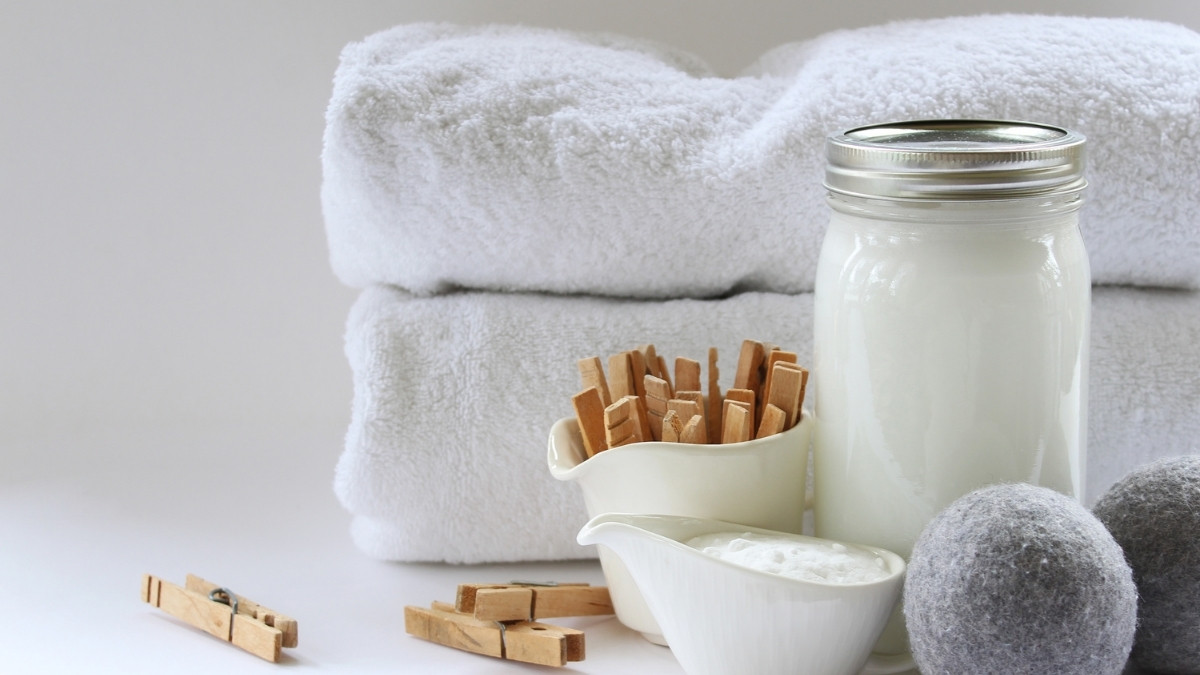
Fabric softener is a laundry room staple for most families. After all, we want to keep our clothes soft, wrinkle-free, and fresh-smelling.
But, there is an ugly truth behind conventional fabric softeners:
They are loaded with dangerous chemicals like quats and phthalates, and they don’t even do our clothes any favors. Softeners are harmful to our bodies and our garments. They’re also made from petroleum-based chemicals, and they come in plastic jugs.
In short, your seemingly inoffensive fabric softener is:
- Putting your health at risk
- Shortening the lifespan of your clothes
- Destroying the planet by contributing to plastic pollution
But, there is an alternative to the synthetic chemicals found in standard products. From homemade recipes to eco friendly store-bought softeners, there are more than a few natural options to choose from.
In this article, we’ll go in-depth on why you don’t need conventional fabric softeners. We’ll also cover what you can use instead.
How Does Fabric Softener Work?
First, use an eco friendly, gentle, laundry detergent that is tough on stains. Here’s how it works.
Laundry detergents break off small stain molecules and dissolve them in the water. When you wash off the detergent, the dirt and grime go away with it.
However, the water in our pipes has natural mineral content. The more minerals it has, the harder we say the water is. The detergent molecules stick to the calcium and magnesium in water instead of going to the stains. Washing is then less effective.
The mineral buildup on clothes makes them stiffer and wrinkly after washing. The drying process matters, too. When you air dry items, they are more likely to feel rough to the skin.
Fabric softener is a lubricating chemical that sticks to the outer layer of the fabric. It makes clothes feel softer and reduces the static cling. You add it to the rinse cycle of your washing machine so it can stick on freshly washed clothes.
Dryer sheets work similarly by coating your clothes in a softening, static-reducing chemical.
In this case, the sheet is coated with stearic acid (or another fatty acid), which melts from the dryer’s heat and covers the fabric.
Both dryer sheets and fabric softeners also contain fragrance molecules. The scent sticks to the garments along with the lubricant and keeps them smelling fresh for longer.
But, the sticky coating doesn’t just go on your clothes. Whenever you use fabric softener or dryer sheets, there is always residue. These chemicals accumulate in your washing machine or the filter of your dryer, clogging them up with every load.
Why is Fabric Softener Bad?
Now that you know how fabric softener works let’s talk about why it’s not so great for your health and the environment.
First off, fabric softener is a chemical film that sticks to the fabrics. Your skin is in constant contact with it, so it’s no surprise that softeners are a frequent cause of contact dermatitis.
But it gets worse.
Fabric softeners and dryer sheets pack a cocktail of dangerous chemicals:
- Quaternary ammonium compounds (“quats”) keep our clothes wrinkle-free straight out of the wash. Unfortunately, they have been known to trigger asthma attacks in some people. Even more alarmingly, quats have shown to be a reproductive toxin in animal models.
- Fragrances – anything labeled a “fragrance” is a synthetic scent made out of petroleum derivatives. Companies don’t have to tell you what is in it because it’s a trade secret. But, fragrance ingredients have toxic chemicals that are possible carcinogens or hormone disruptors.
- Preservatives like methylisothiazolinone and glutaral are linked to severe skin reactions, reproductive toxicity and can cause asthma attacks. Gluteral is also a significant water pollutant that is toxic to marine life.
- Dyes, which make your clothes look brighter, also harm your body and the environment. D&C Violet No.2 is particularly worrying, as it is a potential carcinogen and a skin irritant.
Many of the synthetic ingredients in fabric softeners come from petroleum products. One of the most polluting industries on the planet.
The plastic packaging is most often made from virgin plastic. Plus, the product residue left inside the bottle makes them virtually unrecyclable.
Traditional fabric softeners are even bad for your clothes. The chemical film makes fabric lose its moisture-wicking powers. Not only will your shirt get smellier, faster, but the buildup can damage the fibers and reduce the lifespan of your garment. This is also why using a homemade laundry soap is not a good idea.
What Can I Use As a Natural Fabric Softener?
While conventional options aren’t great, natural fabric softener is surprisingly easy to find or make yourself.
How do you make homemade fabric softener? I am so glad you asked.
Homemade Fabric Softener Recipes
One of the easiest softener swaps you can make is plain old vinegar. Add half a cup of white vinegar right before your final rinse cycle to soften the fabric and keep it wrinkle-free. Don’t worry – the smell won’t stay on your clothes.
For a slightly more sophisticated recipe, try mixing two cups of vinegar, two cups of water, and two tablespoons of glycerin. Glycerin acts as a lubricant in this recipe. Unlike synthetic fatty acids, it’s safe for your skin, and it washes off with water, so there is no buildup.
Is vinegar a natural fabric softener? Yes, and an awesome one at that. But, it is only suitable for top-loading machines. The acid in it may damage the rubber seals on your front-loading washer, leading to leaks or energy loss.
If you have a front-loader, opt for baking soda instead.
Half a cup of baking soda will neutralize the minerals in hard water, help the detergent clean more efficiently, and soften the fabrics. It is a food-grade ingredient that comes in recyclable cardboard boxes, and it’s much cheaper than any fabric softener.
If you miss the smell of freshly cleaned laundry, you can add a couple of drops of essential oil to any of these recipes. My personal favorites are lavender and lemon, but you can use any mix you like. If you have a skin condition or you’re prone to allergies, though, it’s best to stick with unscented options.
Soap Nuts
Soap nuts are a game-changer when it comes to eco friendly laundry. They contain natural saponin, a foaming chemical, which cleans your clothes similarly to detergent. Not only is this a safer way to wash your clothes, but saponin is also a natural fabric softener.
To wash and soften your clothes, throw 4-5 soap nuts in the cotton bag they come in and run the load as usual. Soap nuts are biodegradable and reusable up to ten times. They are an eco friendly and inexpensive choice.
Store-Bought Natural Softener
Most store-bought options are laden with toxic chemicals, but not this one. The Dropps fabric softener checks all the boxes. It’s a natural, safe, and sustainable product.
The company is taking many steps toward more eco friendly production, from compostable packaging to carbon-neutral shipping. And, Dropps is perfect for activewear, preserving its sweat-wicking powers.
We are partial to the lavender-scented softener, but they also have an unscented product.
Dryer Sheet Alternatives
Now that we covered natural fabric softeners, what do we do about the dryer sheets?
One thing is for sure – the conventional product is not a good option. Here are some better ones:
Wool dryer balls look adorable, but they are far more than just cute.
Dryer balls stop laundry from clumping together in the dryer, which improves warm air circulation and reduces drying time.
They are easy to use, long-lasting, and fully compostable once you’re done with them. You can use a single ball on 1000+ loads, and they will reduce drying time by 20-40%.
We love the Friendship Wool ones because they are cruelty-free certified, and 100% organic. Nepalese women with disabilities make the wool balls and receive fair, livable wages for the work. And they look like little animals!
Bamboo dryer balls are a vegan alternative to wool balls. Bamboo is a great sustainable material. It grows fast, doesn’t need fertilizer, and regenerates from its roots.
Finally, even throwing a tennis ball in the dryer will separate the layers of fabric. Your garments and towels dry faster and come out of the dryer wrinkle-free.
Conclusion
Whether it’s tradition or the result of advertising, fabric softener and dryer sheets are a staple in many households. We want our clothes and towels to be soft and smell fresh and whites to be bright. Few people realize the health and environmental risks involved.
Conventional fabric softening products keep your garments wrinkle-free and smelling nice. Unfortunately, they are also laden with toxic chemicals. Quaternary ammonium compounds, fragrances, dyes, and questionable preservatives are all potentially dangerous to our health.
It’s no wonder that the Environmental Working Group (EWG) recommends steering clear from any softener.
Luckily, we have natural fabric softener alternatives. And they are surprisingly cheap and easy. You will find vinegar and baking soda in most kitchen cupboards.
These homemade softeners give you control over all the ingredients, but there are safe store-bought options as well. For example, swap the dryer sheets for wool dryer balls or the softener from Dropps.
Ultimately, even skipping out on fabric softeners is a good option. Your body and the planet will be very grateful you made that choice.